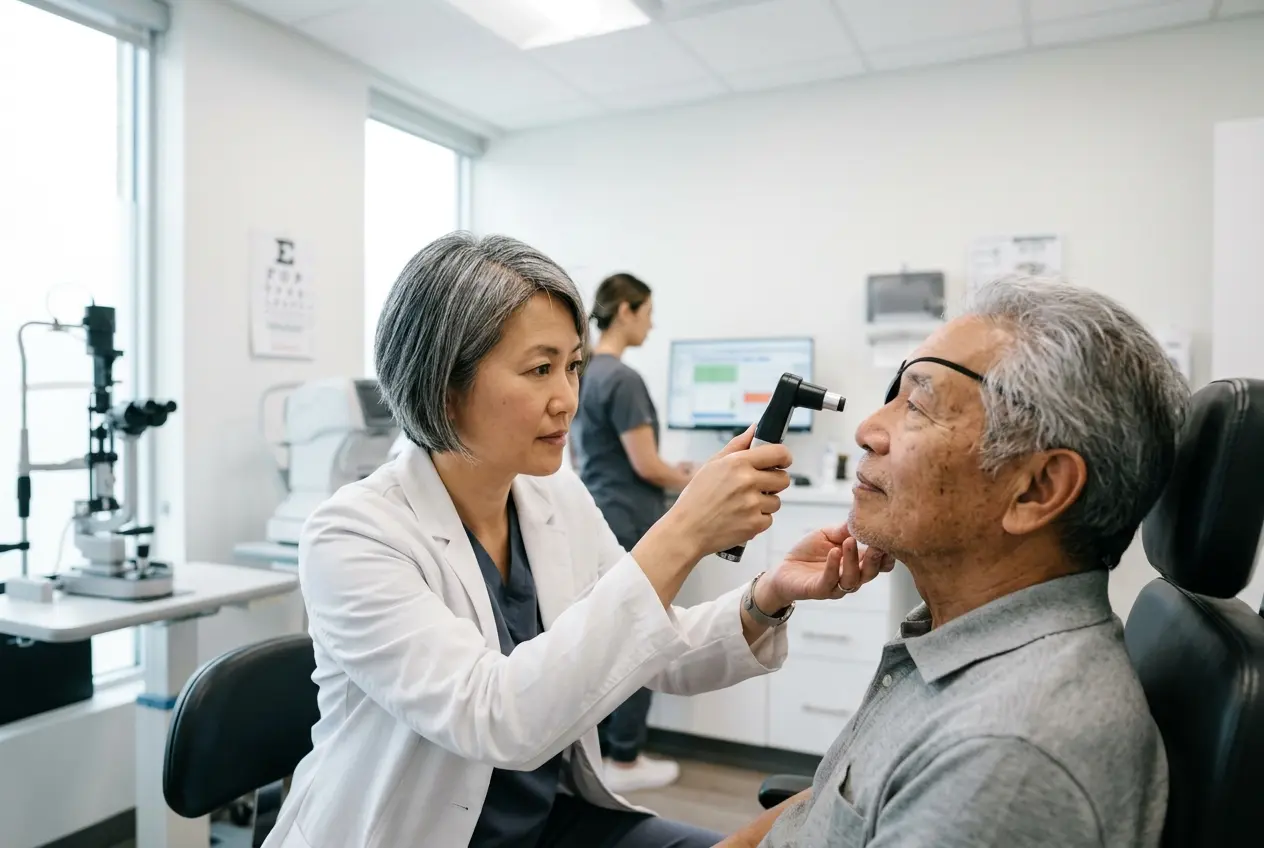
Glaucoma often develops without symptoms until significant vision loss occurs. Our glaucoma management program focuses on early detection through comprehensive testing and preserving vision through careful monitoring.
We use advanced diagnostic tools including optical coherence tomography (OCT) and visual field testing to assess optic nerve health. For Richmond patients with family history of glaucoma or other risk factors like African American heritage or diabetes, we recommend more frequent screenings.
Treatment plans may include prescription eye drops, laser procedures, or coordination with ophthalmologists for surgical options. We emphasize education about this complex disease and work closely with patients to manage it effectively long-term.
We use advanced diagnostic tools including optical coherence tomography (OCT) and visual field testing to assess optic nerve health. For Richmond patients with family history of glaucoma or other risk factors like African American heritage or diabetes, we recommend more frequent screenings.
Treatment plans may include prescription eye drops, laser procedures, or coordination with ophthalmologists for surgical options. We emphasize education about this complex disease and work closely with patients to manage it effectively long-term.
Our Process
- 01 Step 1: Baseline testing including eye pressure measurement and optic nerve imaging
- 02 Step 2: Evaluation of risk factors and family history
- 03 Step 3: Development of personalized monitoring schedule
- 04 Step 4: Ongoing treatment adjustments as needed
Benefits
- Early detection of this sight-threatening condition
- Advanced diagnostic technology
- Personalized treatment plans
- Ongoing monitoring to preserve vision
Frequently Asked Questions
How often should I be tested for glaucoma?
Adults should have baseline testing by age 40, then every 1-2 years depending on risk factors. Those with glaucoma need monitoring every 3-6 months.
Is glaucoma treatment painful?
Most treatments involve simple eye drops or painless office procedures. We prioritize patient comfort throughout the process.
Can glaucoma be cured?
While damage can't be reversed, early detection and proper treatment can almost always halt progression and preserve remaining vision.